
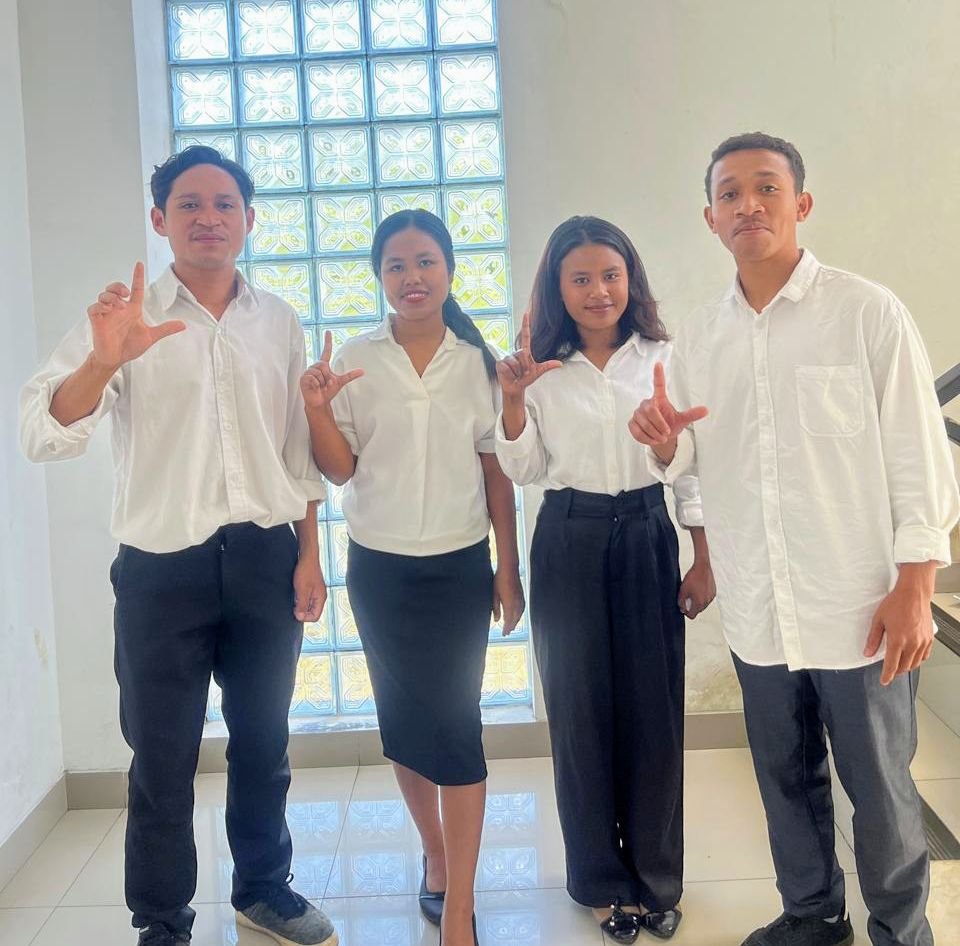
Written by Romaldus Suwataton, Yanuarius Jebaru, Maria Ayurisna Teris, and Maria Venite Yatri Kom
MANGGARAI, PENA1NTT.COM – In the social dynamics of the Flores community, the practice of belis (dowry) often becomes a long debate that triggers both pros and cons.
On one hand, belis is considered the highest form of respect for a woman’s dignity and a way to strengthen bonds between families.
On the other hand, the commercialization of dowry in the modern era has turned this sacred meaning into a heavy economic burden, often creating obstacles to building a new family.
Although belis is a cultural heritage rich in philosophical value, the challenge of keeping it relevant today has become urgent. This raises an important question: how can society preserve the essence of belis without falling into materialistic pragmatism that actually harms that very dignity?
Often, the decline in the true meaning of belis is linked to shifting values in a consumerist culture. Many argue that the pressure to meet high social standards has replaced the value of family bonding with nominal benchmarks of money or goods.
However, this issue cannot be seen merely as a side effect of modernity. The real problem lies in how the culture is practiced.
The loss of the essence of belis is often influenced by a lack of deep understanding of the roots of the tradition, pressure from social status (gengsi), and a lack of dialogue between families regarding the main purpose of marriage.
Therefore, correcting the meaning of belis requires more than just ignoring the tradition; it requires creating spaces where the value of agreement and dignity are upheld once again.
Customary communities and social organizations play a crucial role as platforms to correct the understanding of belis.
Through discussions, cultural literacy education, and the involvement of community leaders, these communities can bring belis back to its proper path: as a symbol of appreciation, not a transactional tool.
Marriage should not be seen as a place to show off wealth, but as a meaningful experience that strengthens the ties between two large families.
When families have the space to discuss openly about their capacity and the meaning behind the dowry, a woman’s dignity will be valued more than just the material gift provided.
Social research shows that environments that support healthy cultural values significantly influence the well-being of young families.
Families who practice belis wisely tend to have more harmonious kinship relationships compared to those who are trapped in debt for the sake of social status.
Communities that actively conduct educational campaigns regarding proportional belis can create positive environments that encourage the younger generation to keep loving their culture without feeling burdened.
Furthermore, open dialogue within the community helps sharpen the critical thinking of society so they can distinguish which traditions should be maintained and which need to be adjusted to current economic realities.
Concrete examples of this effort can be found in several initiatives by traditional leaders or churches in Flores that have begun to socialize the importance of a belis that is simple yet dignified.
Focus group discussions and pre-marriage counseling based on local wisdom have helped many young couples understand that the value of belis lies in sincerity and the agreement of both parties.
Such programs have proven effective in minimizing unnecessary economic burdens while increasing awareness of the importance of treating women as dignified subjects.
Beyond statistics and debates over nominal amounts, belis should create a deep transformation in relationships between families.
For many couples, family involvement in a healthy belis process is the first step toward building a strong foundation for their household.
Stories about couples who successfully bridged cultural gaps through honest communication prove that belis is about empowerment and mutual respect. This demonstrates that tradition can be a unifying tool, not a divisive one.
To maximize the impact of this shift in meaning, support from various stakeholders is essential. Traditional leaders, local governments, religious institutions, and the wider community must collaborate to socialize a more humane value of belis.
The government can contribute through policies that support the strengthening of cultural values, while educational institutions and communities can become facilitators for dialogue.
This collaboration is crucial to creating a social environment that supports healthy and sustainable marriages.
The issue of belis is one of the most pressing cultural and social challenges in the modern era. While times continue to change, the need for respect and dignity in the marriage bond remains constant and urgent.
Correcting the meaning of belis proves that meaningful change can begin at the grassroots level by bringing society together to sit, discuss, and understand the essence of tradition.
More importantly, this helps form a society that is more critical, cultured, and appreciative of human values.
Therefore, reviewing and supporting the correct meaning of belis is not merely an effort to preserve tradition, but a long-term investment in the well-being and dignity of future generations.