

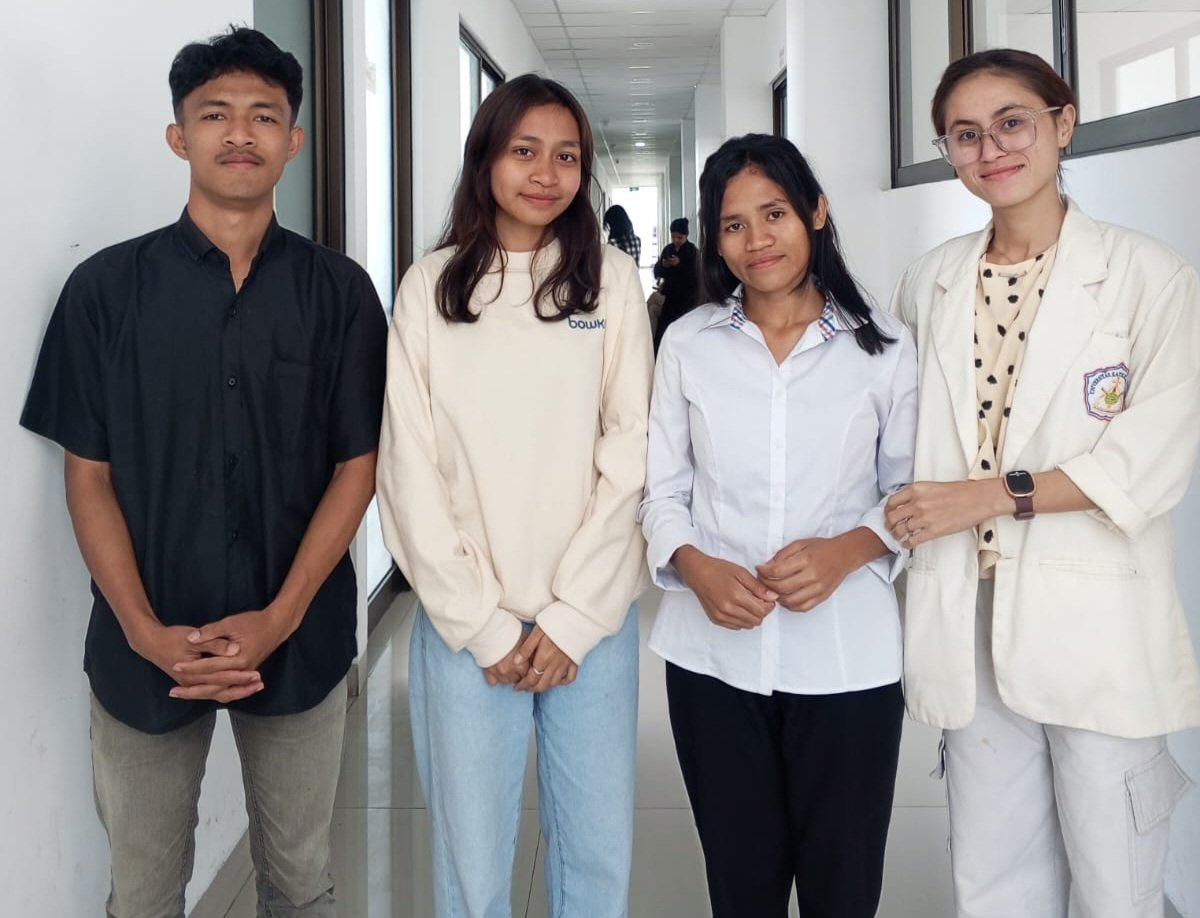
By: Angela Mariska Goo, Adelia Helvi, Helena Jesika Adung, Jhohanes Baptista Sit
English Language Education Study Program, Universitas Katolik Indonesia St. Paulus Ruteng
Introduction
In today’s hyper-connected world, technological advancement acts as a double-edged sword. The exponential growth of the internet, social media, and Artificial Intelligence (AI) has undeniably democratized knowledge, streamlined global communication, and redefined the modern workplace. Technology is no longer just a tool; for the younger generation, it is the very infrastructure of daily life. With a single tap on a smartphone, barriers of time and space dissolve. However, this rapid digital leap hides a critical systemic flaw: as our processors grow faster, our collective moral compass seems to be spinning out of control. Technological progress is accelerating, but human ethical awareness is visibly lagging behind.
The Screen as a Shield: The Anonymity Crisis
The most glaring symptom of this ethical decline is the toxic culture brewing on social media platforms. In physical interactions, social norms and immediate feedback naturally regulate human behavior. Online, however, the luxury of anonymity detaches users from moral responsibility. Behind a screen, individuals feel empowered to launch hate speech, execute cyberbullying campaigns, and manufacture misinformation without fearing real-world consequences. This digital shield detaches empathy from communication. It proves that while technology has successfully connected our devices, it has simultaneously disconnected our basic human decency.
The AI Shortcut: Erosion of Academic Integrity
This ethical decay is equally pressing within the walls of academia. The integration of AI and digital databases into education was meant to foster creativity and critical research. Instead, it has birthed a crisis of academic dishonesty. An increasing number of students now misuse AI tools not as learning assistants, but as ghostwriters—submitting fully automated assignments without engaging in the actual cognitive process. When copy-pasting replaces critical thinking, and algorithm manipulation replaces genuine comprehension, we are not just witnessing plagiarism; we are witnessing the systematic erosion of intellectual honesty and analytical skills in future educators and leaders.
The Virtual Mirage: Displacing Real-Life Empathy
Beyond communication and education, technology is fundamentally altering human psychology. As individuals sink deeper into virtual environments, core social virtues—such as active listening, deep empathy, and patience—are being displaced by a hunger for instant gratification and digital validation. It is a modern paradox: we are more interconnected than ever, yet profoundly isolated from genuine human connection. When people become more comfortable trading insults in a comment section than engaging in a polite face-to-face debate, it is a clear sign that our machines are normalizing coldness and hostility.
A Shared Manifesto for Digital Civility
Fixing this broken digital landscape is not a burden that an individual can carry alone; it requires a structural counter-movement from families, educational institutions, and society at large.
-At home, parents must shift from merely limiting screen time to actively mentoring digital behavior.
-In universities, digital ethics and media literacy must not be treated as optional seminars, but as foundational pillars of the curriculum.
-As users, we must collectively enforce a new standard of digital civility, recognizing that freedom of expression online does not equate to freedom from moral accountability.
Conclusion
Ultimately, technology is merely a mirror reflecting human intent. The rise of cyberbullying, widespread plagiarism, and the normalization of online hostility are not failures of the software, but failures of the user’s conscience. We cannot slow down the march of innovation, nor should we. However, we must ensure that our moral evolution keeps pace with our technological revolution. Only through conscious self-awareness, rigorous character education, and an unyielding commitment to academic and digital integrity can we prevent our advancements from turning into our ultimate ethical undoing.