

Written by Yosefina Eka Anggraini, Renata Yunistra Budiman, Astimaya Yeni Delo, Skolastika Jenita, and Marsela Putriana Salju
MANGGARAI, PENA1NTT.COM – Advances in artificial intelligence have transformed many aspects of life, including the fields of image editing and digital photography.
Today, numerous AI-powered applications allow users to alter, enhance, and even create highly realistic images.
While these innovations offer many benefits, their misuse can lead to various social issues, one of which is the spread of misinformation and misunderstandings on social media platforms.
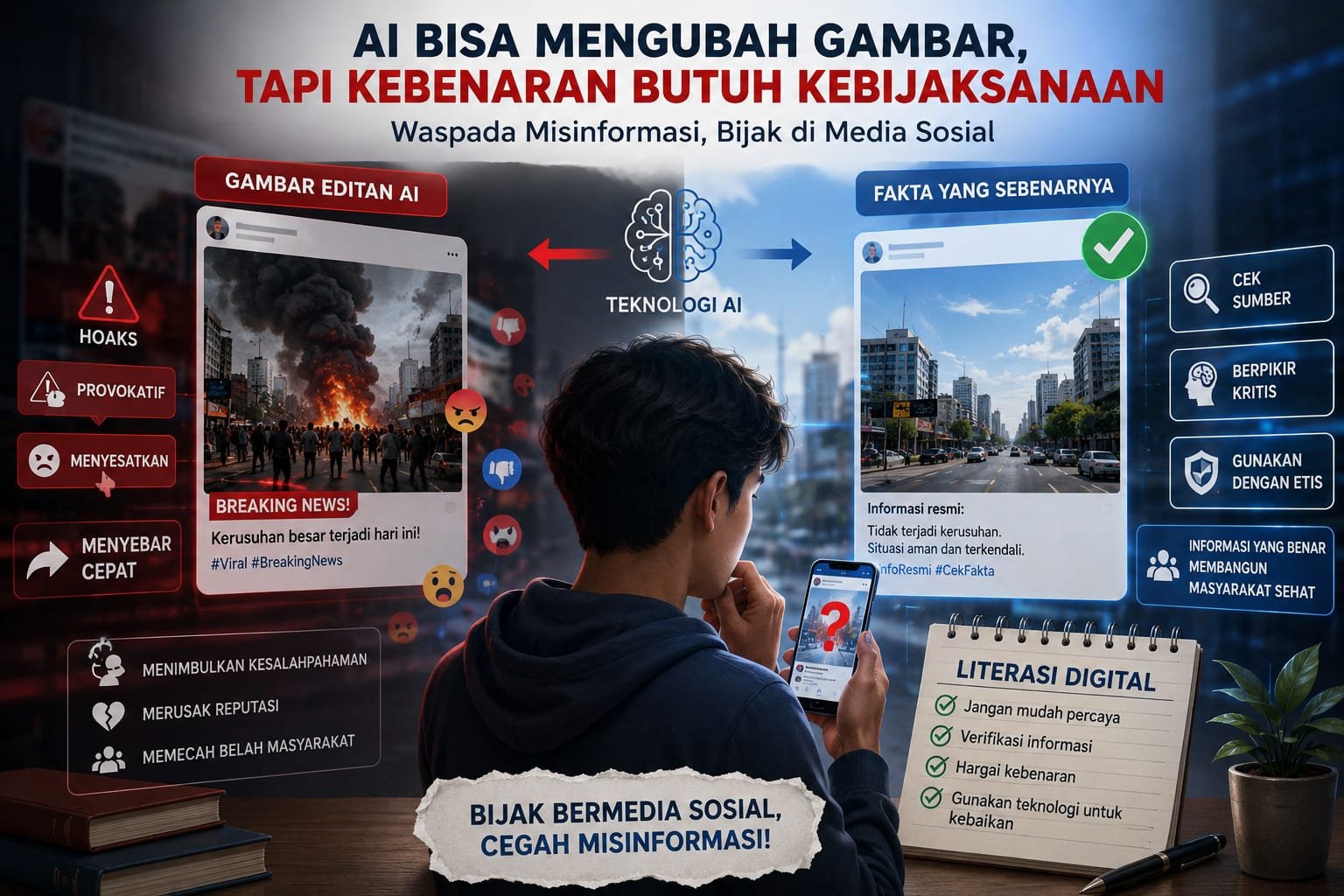
The phenomenon of photo editing using AI technology is becoming increasingly common in everyday life. Various images circulating on social media often depict events, conditions, or individuals in situations that never actually occurred.
Because the results of AI-based editing appear so realistic, many social media users have difficulty distinguishing between original images and those that have been manipulated.
One phenomenon that is widely observed today is the spread of images depicting disasters, social conflicts, or public figures, accompanied by inaccurate information.
These photos are usually accompanied by provocative narratives that can quickly capture the public’s attention. As a result, potentially false information can spread rapidly and create misguided public opinion.
In our view, the excessive use of AI for image editing can be a primary cause of the increasing spread of misinformation on social media. Images possess a visual appeal that can influence individual perceptions more quickly than information presented in written form.
When people see images that appear convincing, they tend to believe them without first verifying the source of the information in question.
In addition to fueling fake news, the use of AI technology for image manipulation can lead to social misunderstandings.
An individual may become the target of defamation due to a modified photo that has been widely circulated. In some situations, edited images can damage the reputation of a specific individual, group, or organization.
This indicates that technological advancements not only offer benefits but also present moral challenges that every user of digital platforms must consider.
On the other hand, the phenomenon of excessive image editing also affects the public’s perception of reality. Many people on social media present a self-image that is vastly different from reality with the help of AI technology.
This situation can create unrealistic beauty standards and potentially affect self-confidence, especially among young people who are active on social media.
From the explanation above, we can conclude that the excessive use of AI in image editing has a significant impact on the spread of fake news and the emergence of misinformation on social media.
AI technology’s ability to create images that appear realistic can be utilized for good purposes, but it also has the potential to be misused to spread misleading information.
Therefore, it is important to improve digital literacy, adopt a critical mindset when receiving information, and foster ethical awareness in the use of technology so that the benefits of AI can be realized without creating negative impacts on society.