

Written by Anna Asri Nangkur
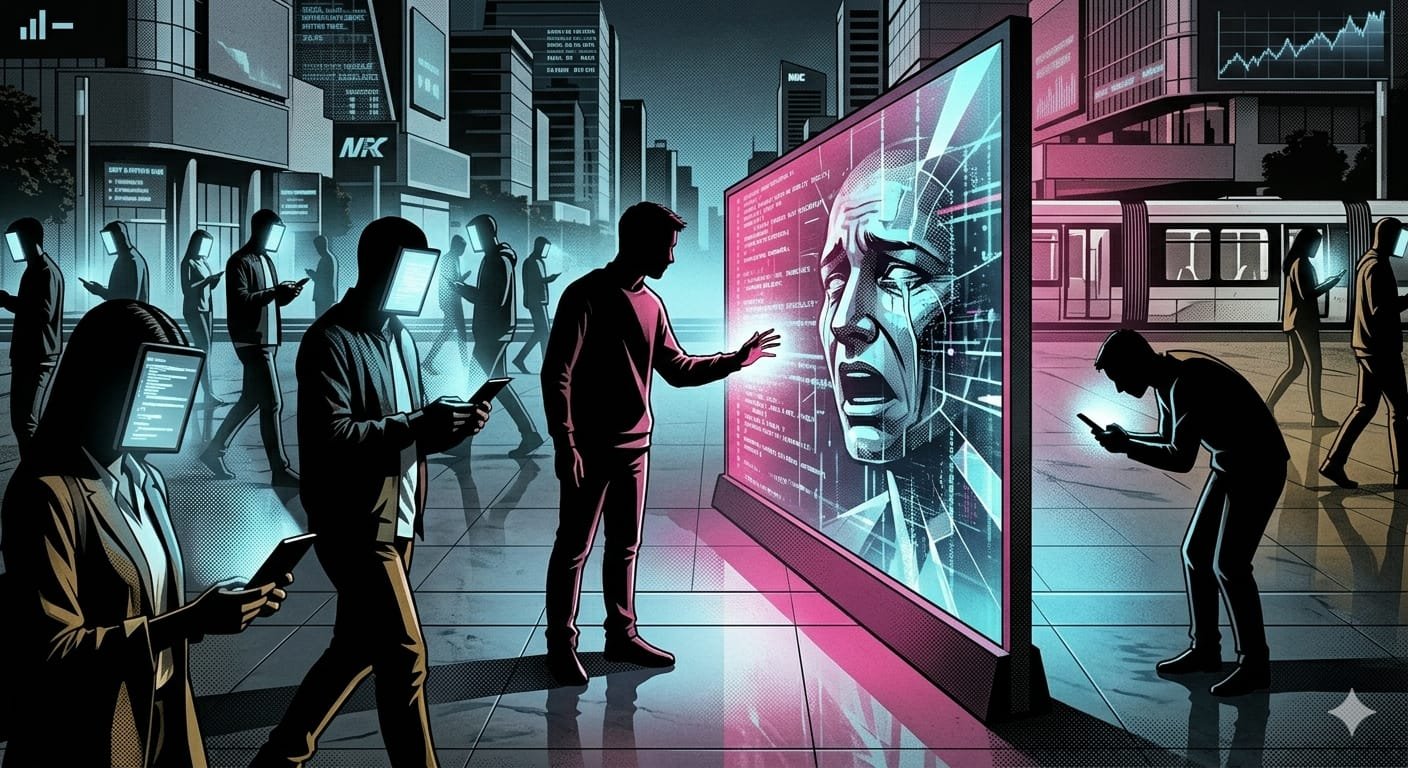
MANGGARAI, PENA1NTT.COM – Modern society has never been more connected, yet many people report feeling increasingly misunderstood, isolated, and disconnected from those around them.
Smartphones, instant messaging, and global communication networks allow individuals to interact at any moment, but these technological advances have not necessarily strengthened human understanding.
This paradox raises an important question: Are we experiencing an empathy crisis in modern society?
Evidence suggests that this concern is not merely anecdotal. In 2023, the U.S. Surgeon General identified loneliness and social isolation as a major public health concern, warning that a lack of social connection can have serious consequences for both individuals and communities.
Research has shown that social isolation is associated with increased risks of premature mortality, cardiovascular disease, and mental health problems. These findings highlight the importance of meaningful human relationships in maintaining a healthy society.
Empathy is often defined as the ability to understand and share the feelings of others. It plays a crucial role in maintaining healthy relationships, resolving conflicts, and building strong communities.
However, many aspects of contemporary life seem to discourage the development of empathy.
Rather than taking the time to understand different perspectives, people are increasingly encouraged to react quickly, form immediate judgments, and prioritize efficiency over meaningful interaction.
One reason for this trend is the changing nature of communication. Modern technologies allow information to travel instantly, but they also create a culture of constant responsiveness.
People are often expected to react immediately instead of reflecting carefully on what others may be experiencing.
As a result, conversations can become exchanges of opinions rather than opportunities for genuine understanding. The issue is not technology itself, but the habits and expectations that often accompany it.
Recent evidence also points to a decline in everyday social interaction. According to the World Happiness Report 2025, approximately one in four Americans reported eating all of their meals alone in 2023—a significant increase compared with previous decades.
The report also found that sharing meals with others is strongly associated with higher levels of happiness, stronger social support, and lower levels of loneliness.
These findings suggest that opportunities for meaningful human connection may be decreasing, even as communication technologies continue to expand.
Research further indicates that empathy itself may be declining. A study led by psychologist Sara Konrath found that college students in the United States demonstrated lower levels of empathy than students from earlier generations.
While the causes remain debated, the findings raised concerns among researchers about the changing nature of interpersonal relationships and the social factors that influence empathy development.
However, it would be inaccurate to claim that empathy is disappearing entirely. Some scholars argue that modern society has become more aware of issues such as mental health, discrimination, and social injustice.
Public discussions surrounding these topics have increased significantly in recent years, suggesting that concern for the well-being of others remains strong.
Nevertheless, awareness alone does not necessarily translate into genuine understanding. Knowing about a problem is different from empathizing with the people who experience it.
The consequences of declining empathy can be significant. Communities with lower levels of mutual understanding often experience greater mistrust, polarization, and social division.
Furthermore, the U.S. Surgeon General’s report notes that social isolation is linked to a higher risk of premature death and a range of physical and psychological health challenges.
These findings demonstrate that empathy and social connection are not merely moral values, but essential components of public well-being.
Addressing this issue requires more than simply encouraging people to be kind. Schools should place greater emphasis on perspective-taking, critical thinking, and meaningful discussion.
Families should create environments where listening is valued as much as speaking. Individuals must also recognize that understanding others requires patience, humility, and a willingness to question their own assumptions.
In conclusion, the empathy crisis in modern society is not simply about people becoming less caring. Rather, it reflects a broader decline in meaningful social connection.
As loneliness rises and face-to-face interaction becomes less common, societies may find it increasingly difficult to cultivate understanding and trust.
If empathy is to remain a foundation of healthy communities, it must be actively practiced rather than merely discussed.
The challenge facing modern society is not a lack of communication, but a lack of meaningful understanding. As our ability to connect continues to expand, our capacity to understand one another must grow as well.