

Written by: Eufrasia Claudia Gengkor, Anna Asri Nangkur, Modesta Wawang and Aprianus Delon
MANGGARAI, PENA1NTT.COM – In today’s digital age, people are communicating more than ever before, yet intellectual humility seems to be fading.
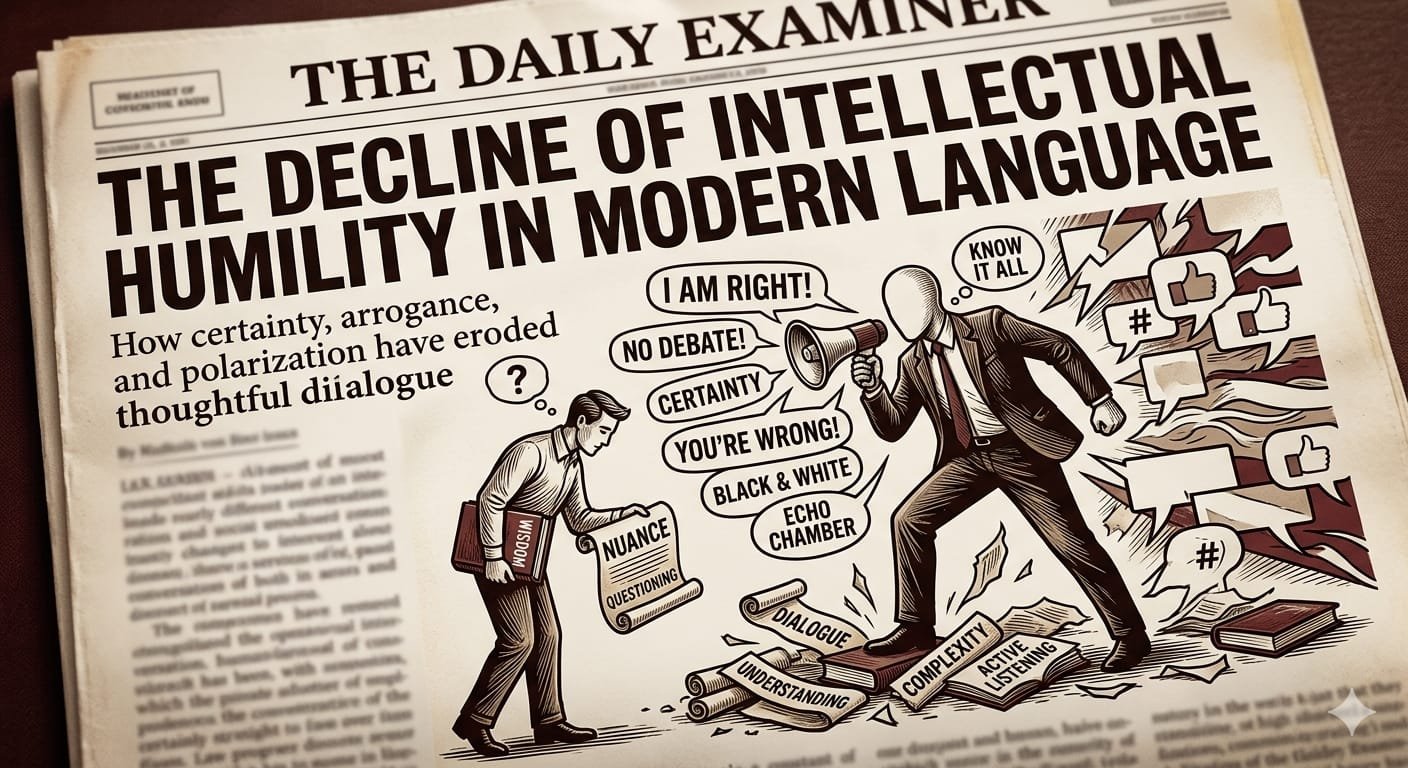
Intellectual humility is the ability to recognize that our knowledge is limited and that we might be wrong. Unfortunately, modern language—especially on social media—increasingly reflects certainty rather than curiosity.
In the past, phrases like “I think,” “I could be wrong,” or “from my understanding” were common ways of expressing an opinion.
Today, these phrases are often seen as signs of weakness or a lack of confidence. Instead, people are encouraged to speak with absolute certainty, even when discussing complex issues that have no simple answers.
One clear example can be seen on social media platforms. When a political controversy, economic issue, or global event occurs, many users quickly form strong opinions after reading only a few posts or watching a short video.
Comments such as “This is obviously the truth” or “Anyone who disagrees is ignorant” have become common. Rather than inviting discussion, this kind of language shuts it down.
A real-world example was the COVID-19 pandemic. Many individuals with little or no medical expertise confidently made claims about vaccines, treatments, and the origins of the virus.
At the same time, scientists often used cautious language such as “based on current evidence” or “more research is needed”.
Ironically, the careful language of experts sometimes appeared less convincing than the confident claims of non-experts. This shows how modern communication often rewards certainty over accuracy.
One reason for this trend is the nature of online platforms. Social media algorithms tend to promote content that is emotional, bold, and controversial.
Statements that leave room for doubt usually attract less attention than statements that sound completely certain.
As a result, many people learn that sounding confident is more rewarding than being thoughtful.
However, intellectual humility does not mean lacking confidence or having no opinion. It means understanding that knowledge is always incomplete and that learning requires openness to new evidence.
A person can defend a strong argument while still accepting the possibility that they may be mistaken.
The decline of intellectual humility is not simply a problem of language. It reflects a broader cultural shift in how people approach knowledge and disagreement.
When conversations become competitions to prove who is right, genuine learning becomes difficult.
A healthy society depends not only on people who can speak confidently, but also on people who are willing to listen, question, and change their minds when necessary.