

Written by: Elisabet Satriani Rudu, Rosalina Ecani Nurti, Elisabet Syukur, Rosalia Nina Lensi and Diki Saputra Bengu
MANGGARAI, PENA1NTT.COM – Imagine that, one day, a child will no longer understand the language used by their grandparents.
Folklore that was once passed down orally will no longer be understood, traditional expressions will lose their meaning, and conversations in regional languages will sound foreign to the ears of the younger generation.
This situation may sound exaggerated, but in reality, threats to the survival of mother tongues are occurring in various regions, including Indonesia.
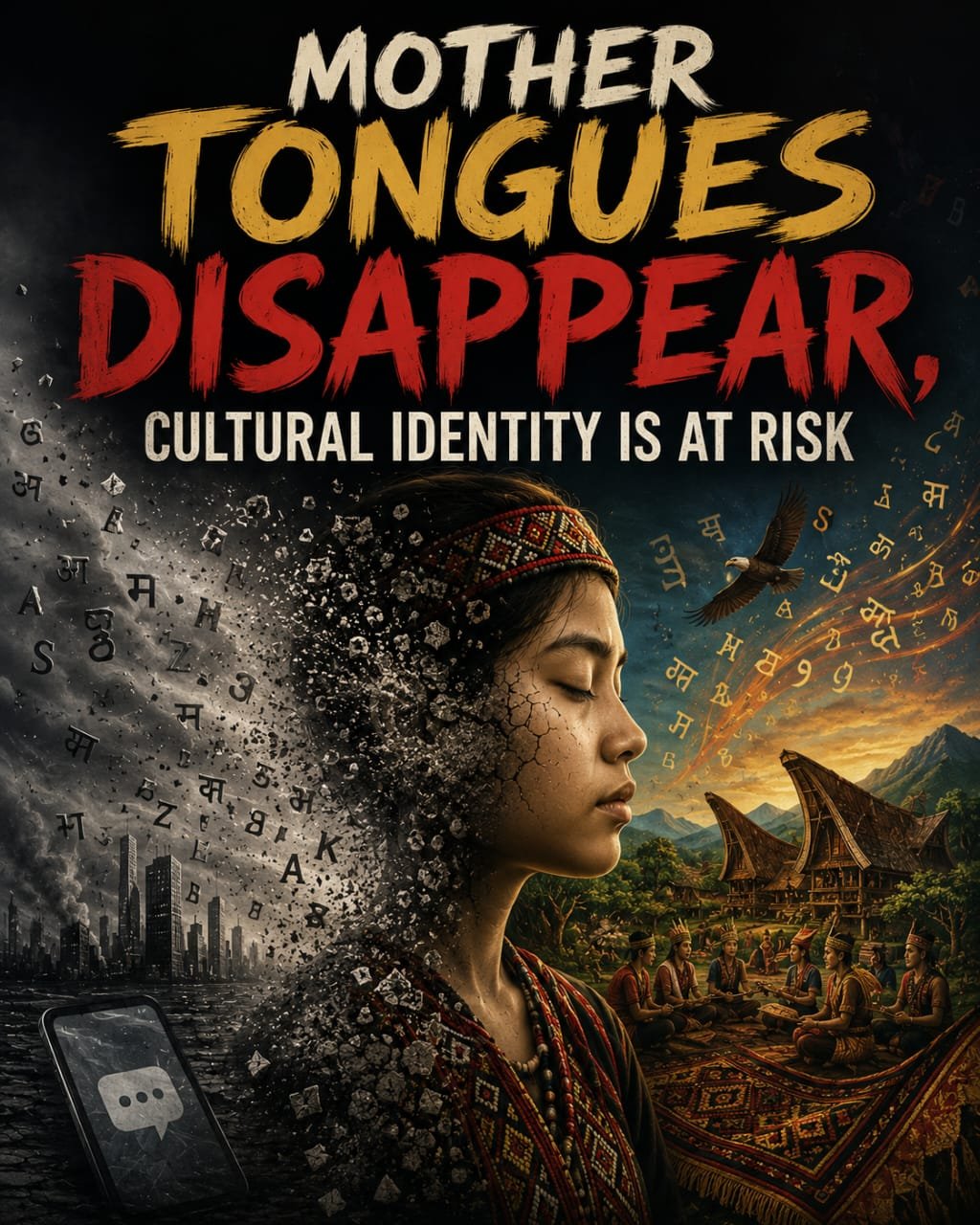
A mother tongue is not only a tool for communication; it contains the history, cultural values, way of life, and identity of a society.
When a language begins to be abandoned, what is lost is not only its vocabulary, but also the cultural heritage that has been built over generations.
The phenomenon of the declining use of mother tongues is increasingly visible among the younger generation.
According to data from the Badan Pengembangan dan Pembinaan Bahasa (2024), the influence of globalization, technological developments, the dominance of national and foreign languages, and the lack of adequate support from the government or society for regional language education have made many young people use Indonesian or English more often in their daily lives.
Regional languages are slowly being displaced and are considered less relevant to today’s needs.
Data show that this condition needs serious attention. According to UNESCO, around 40% of the world’s languages are threatened with extinction due to having fewer speakers and a lack of transmission to the next generation.
In Indonesia alone, several regional languages have experienced a decline in the number of speakers, especially in areas where young people use Indonesian more frequently in family and educational settings.
A concrete example can be seen in the use of the Manggarai language among today’s youth.
Many young people often use Indonesian—and even foreign languages—in daily conversations because they are considered more practical and relevant to educational and social needs.
As a result, the Manggarai language is no longer the main choice in daily communication. Quite a few members of the younger generation still understand the Manggarai language when they hear it, but they have difficulty using it actively in conversation.
A grandchild may still be able to understand stories told by their grandparents, but they may not be able to respond using the same language.
This condition shows that the loss of a mother tongue is not just a linguistic problem, but also a problem of cultural identity. Language is the primary way a society maintains its identity.
Through language, various traditions, moral values, folklore, and local knowledge are passed from one generation to the next. If a mother tongue is no longer used, the process of cultural inheritance will inevitably weaken.
However, maintaining one’s mother tongue does not mean rejecting modern advancements. Mastering Indonesian and foreign languages remains important for education, work, and global communication.
What needs to be done is to maintain a balance between adapting to the modern world and preserving cultural identity. The younger generation can become part of a global society without having to abandon their cultural roots.
Therefore, preserving mother tongues should not be the sole responsibility of governments or educational institutions.
Families, schools, cultural communities, and the younger generation need to be actively involved in maintaining the use of regional languages in everyday life.
Using one’s mother tongue at home, participating in local cultural activities, or even creating digital content in a local language are simple steps that can have a big impact.
Ultimately, when a mother tongue disappears, what is at stake is not only the existence of a language, but also the cultural identity of a society.
The younger generation may still be able to speak to the world, but without their mother tongue, they risk losing touch with the history, values, and cultural roots that shape who they are.
If we want our cultural heritage to live on in the future, then preserving our mother tongue today is no longer an option—it is a necessity.